
A water heater rotten egg smell is one of the most common calls we get around Bergen County, especially in homes on well water. The smell usually isn’t dangerous, but it tells you something is reacting inside the tank, and it’s worth tracking down before it gets worse.
Because the odor is sulfur, some homeowners assume it means a gas leak. It doesn’t always, but the two problems can look similar at first, so it helps to know how to tell them apart.
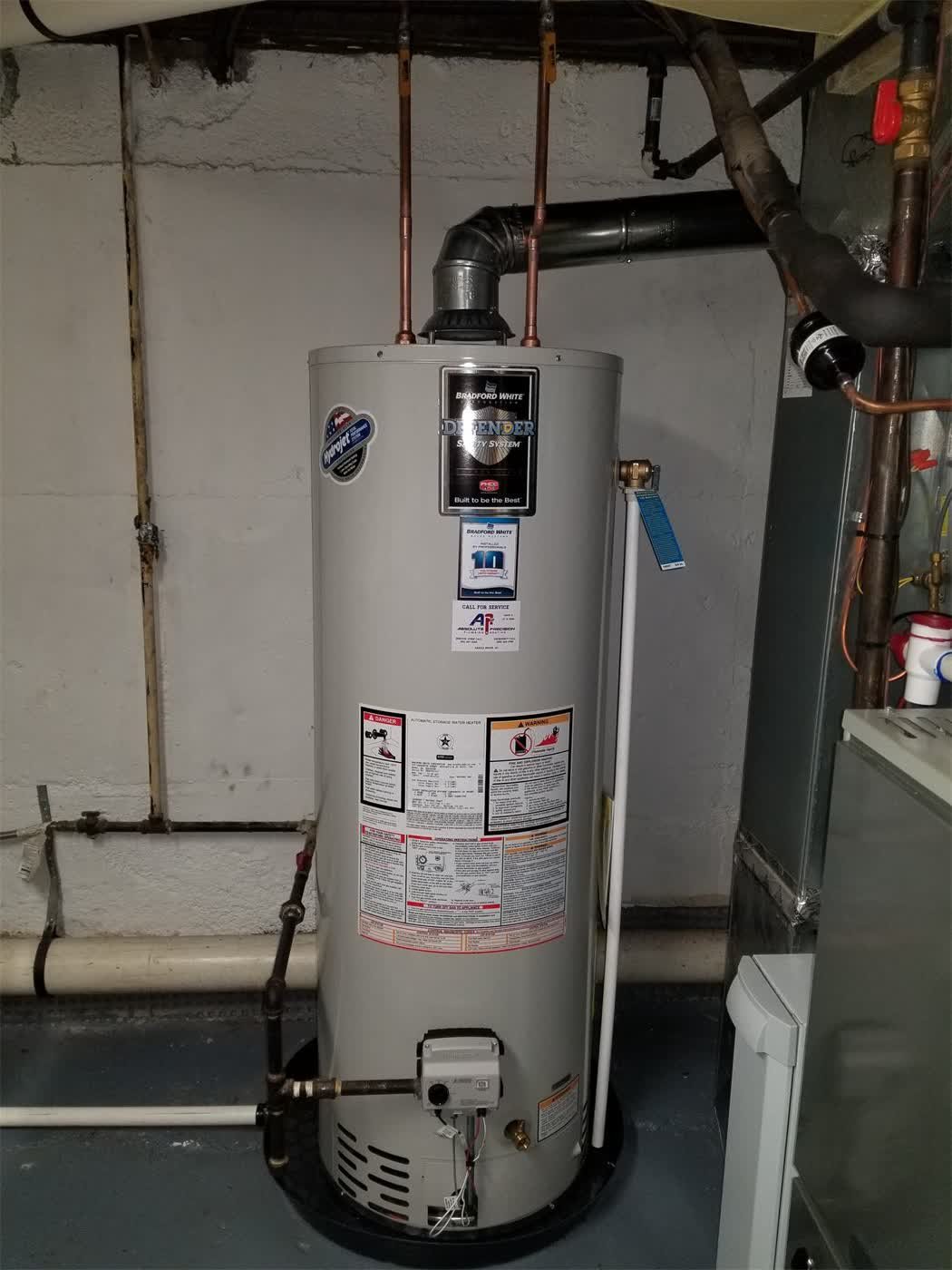
What causes a water heater rotten egg smell
In most tank water heaters, the smell comes from bacteria reacting with the anode rod inside the tank. That rod is designed to corrode instead of the tank itself, and it’s usually made of magnesium. When sulfate-reducing bacteria in the water meet that rod, they produce hydrogen sulfide gas, which smells exactly like rotten eggs.
This shows up more often on well water than on city water, because well water is more likely to already carry these bacteria. It also shows up more in tanks that sit at a lower temperature for long stretches, since warmer water slows the bacteria down. As a result, a water heater that’s rarely used, like one in a vacation home, can develop the smell faster than one that runs every day.
Is it the water heater or something else
Natural gas has an odorant added to it on purpose, and that odorant also smells like rotten eggs. That’s a safety feature, not a coincidence, so it’s worth being careful here. If the smell is only there when you run hot water at the tap, it’s almost always the water heater. However, if you smell it in the air near a gas appliance, or anywhere in the house even when no water is running, treat it as a possible gas leak, leave the house, and call your gas utility right away.
One more way to narrow it down: run the cold tap and see if the smell is there too. If both hot and cold smell like sulfur, the issue is more likely in the water supply itself, such as a well, rather than the water heater alone.
What to do about a rotten egg smell from your water heater
Flushing the tank is usually the first step. Draining several gallons and running hot water through the fixtures can clear out standing water where the bacteria have built up. In other words, moving the water instead of letting it sit is part of the fix.
The anode rod itself is often the longer-term answer. Swapping a magnesium rod for an aluminum or zinc one can reduce the reaction that creates the smell, because the bacteria don’t react with those metals the same way. Some homeowners also raise the tank thermostat for a day to a temperature high enough to kill off the bacteria, then turn it back down to a normal, safe setting afterward.
If the smell keeps coming back no matter what you try, a tankless water heater is worth considering, since it doesn’t hold a standing tank of water the way a tank unit does.
When to call a plumber
Call a plumber if flushing the tank doesn’t clear the smell, if it shows up in both your hot and cold water, or if you’d rather not deal with the anode rod yourself. If you’re dealing with a water heater rotten egg smell that keeps coming back, give us a call. Absolute Precision Plumbing & Heating installs and services both tank and tankless water heaters throughout Bergen County, and we’re available 24/7, including holidays, at (551) 257-6200.
Frequently Asked Questions
Related: Tank water heater installation · Tankless water heaters · More from our blog