
If your home has an older heating system, there’s a good chance you’ve heard the terms “steam boiler” and “hot water boiler” and weren’t totally sure which one you had, or what the difference actually means for you. Both heat your home using a boiler and a network of pipes and radiators, but the way they move heat around is different, and that affects how they sound, how they’re maintained, and what goes wrong with them.
Here’s a plain breakdown of how each system works and what to watch for with yours.
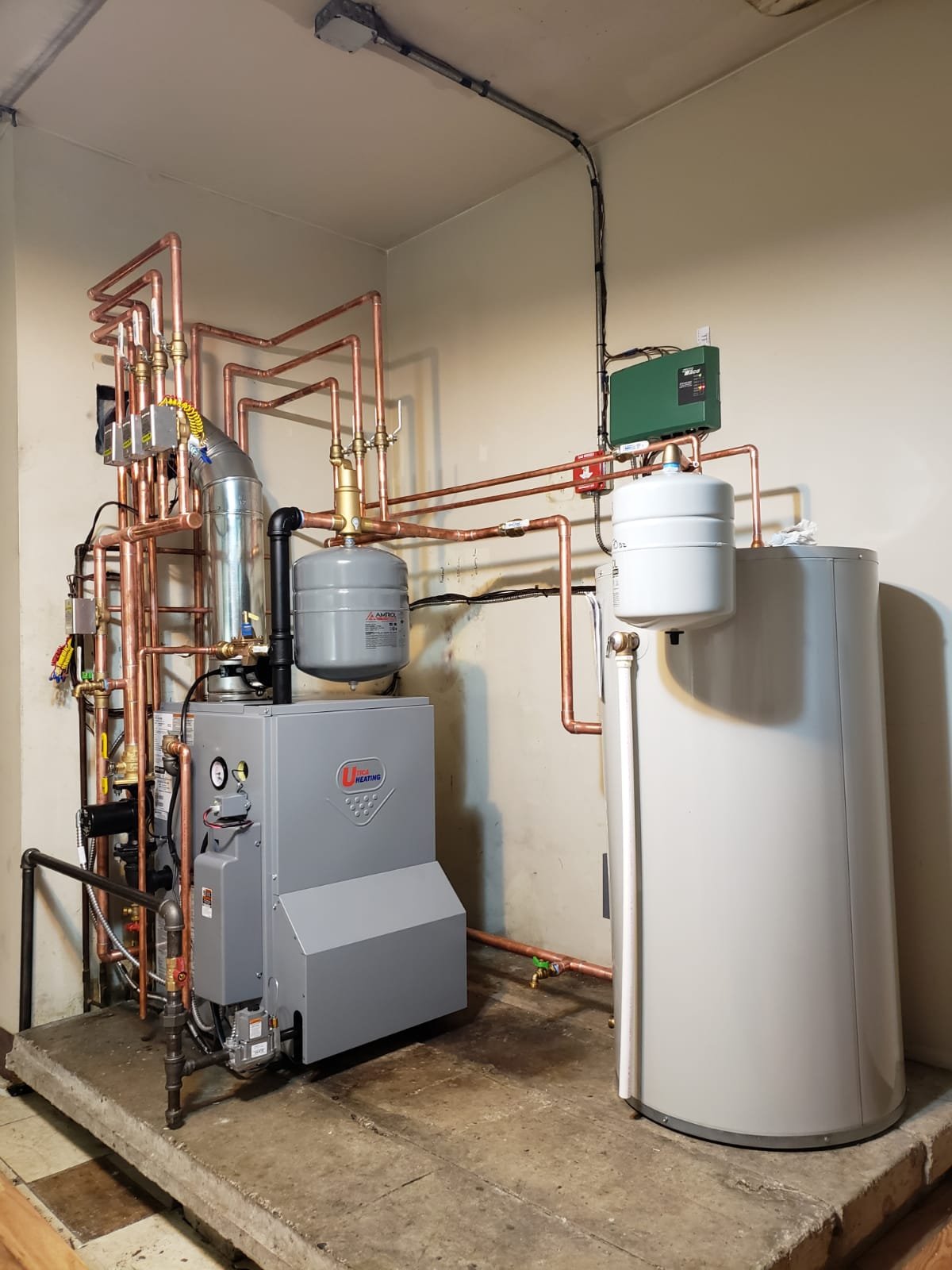
How a steam boiler works
A steam boiler heats water until it turns to steam, and that steam travels up through pipes to radiators throughout the house. As the steam gives off heat in each radiator, it condenses back into water and drains back down to the boiler by gravity, where it gets heated again. Steam systems usually use a single pipe or two pipes per radiator, and they rely on properly pitched piping and correctly sized vents to work well.
How a hot water boiler works
A hot water boiler heats water but keeps it as a liquid the whole time. A circulator pump pushes that hot water through a loop of pipes to radiators or baseboard units, and the water returns to the boiler to be reheated. Because there’s a pump doing the work instead of relying on steam pressure and gravity, hot water systems can usually be zoned more easily, so different areas of the house can be heated separately.
Signs that tell you which one you have
Steam systems tend to have a single large pipe entering the boiler and often make a hissing or knocking sound as steam moves through the pipes and air vents release. Hot water systems usually have two pipes (supply and return) connected to each radiator or baseboard, and you’ll typically see a circulator pump mounted near the boiler. If your radiators have air vents that hiss when the system is running, that’s a strong sign you have steam heat.
Repairs and maintenance differences
Steam boilers need the correct water level to operate safely, and low water cutoffs and pigtail sight glasses need to be checked regularly. Hot water boilers rely more on the circulator pump, expansion tank, and proper system pressure. Both types benefit from an annual tune-up, but the specific parts a technician checks, water level controls on a steam system versus pump and pressure components on a hot water system, are different.
When to call a plumber
Call if a radiator isn’t heating, if you hear banging or kettling from the boiler, if a steam radiator won’t stop hissing, or if you notice water pooling near the boiler. Both systems are safe and reliable when they’re maintained, but issues with water level, pressure, or venting can get worse if they’re ignored. We work on both steam and hot water boilers, including repairs and full installations.
Frequently Asked Questions
Related: Steam heating repairs · Hot water boiler repair · More from our blog