Your sewer line rarely fails in one sudden moment. So there are usually signs your sewer line is failing well before a full backup forces the issue. Catching them early can mean a cleared drain instead of sewage in the basement. A slow drain in more than one fixture, gurgling sounds, or a damp patch in the yard are all worth paying attention to before they get worse.
Older clay and cast iron lines are the most common to break down in Bergen County homes. Tree roots work into joints over years and eventually block them. However, newer plastic pipe can fail too if a contractor installs it poorly or the ground underneath settles unevenly.
What causes a sewer line to start failing
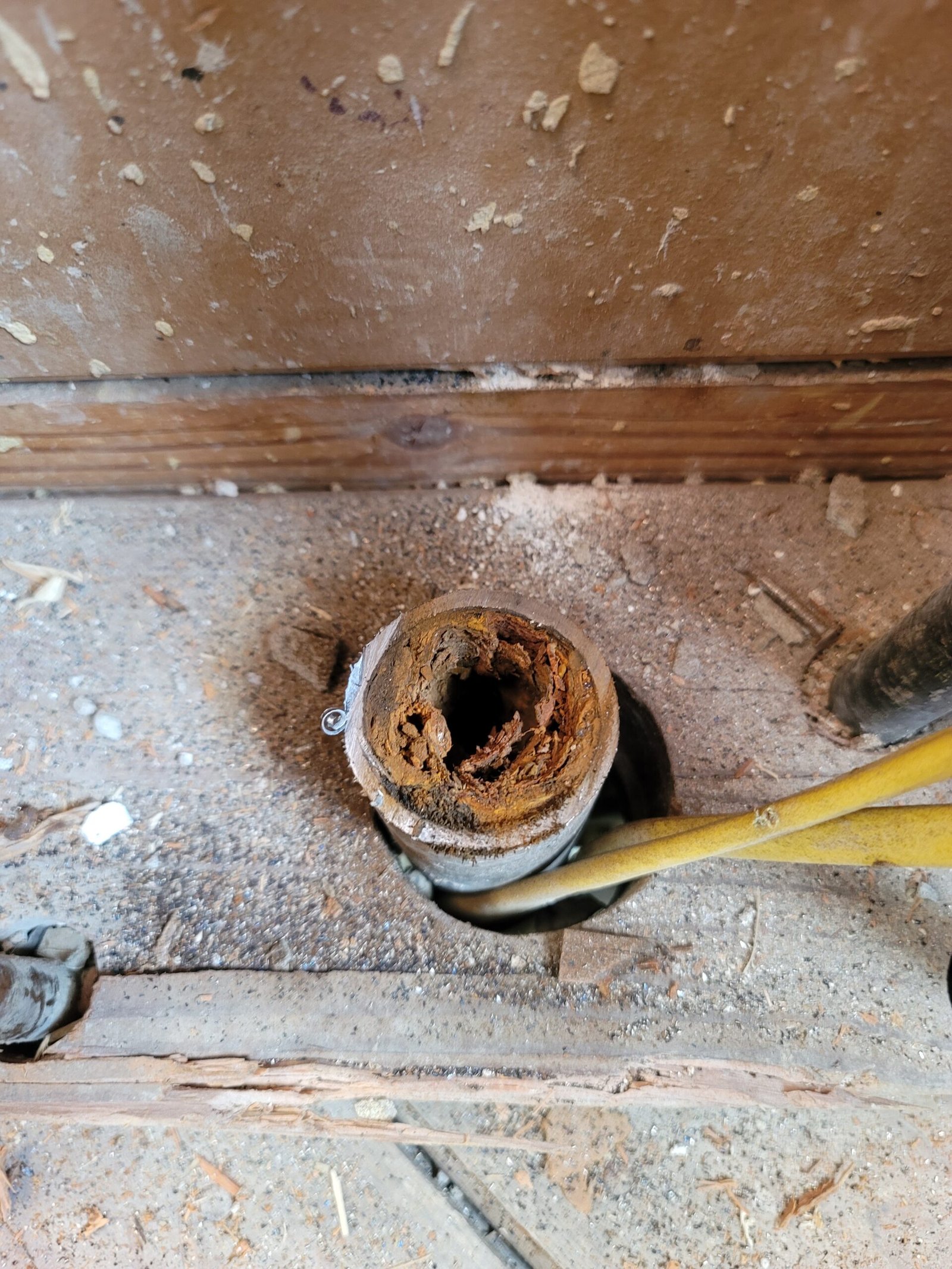
A sewer line usually breaks down for one of a few reasons. For example, tree roots find their way into small cracks or loose joints and keep growing until they block the pipe. Old clay or cast iron pipe corrodes and collapses from the inside over decades of use.
A section can also settle or shift in the ground. That creates a low spot where waste and paper collect instead of flowing through. In other words, the pipe doesn’t need a single big event to fail, just time and the wrong conditions underground.
Signs your sewer line is failing before a backup happens
Several warning signs usually show up before the pipe fully blocks. Next, multiple drains backing up at once points to a problem in the main line, rather than a single clogged trap in one fixture. Gurgling noises from a toilet when a sink runs are another clue, because air gets trapped where it shouldn’t.
A patch of unusually green or soggy grass over the line is another clue. A sewage smell in the yard or basement means waste may already be leaking underground. As a result, it’s worth getting the line checked if more than one of these shows up at the same time.
Why a sewer camera inspection matters
A sewer camera inspection is the only way to actually see what’s happening inside the pipe. Guessing from the symptoms above only goes so far. The camera runs the full length of the line. It shows exactly where a crack, a root intrusion, or a corroded section sits.
That means a plumber can point to the real problem instead of just reacting to a backup after it happens. It also shows how much of the line has damage, which matters for deciding what kind of repair makes sense.
What to do if you notice these signs
Catching the signs your sewer line is failing early almost always costs less than dealing with an actual backup. If you’re seeing slow drains in more than one part of the house, or any of the signs above, it’s time to call a plumber. Don’t wait for a full backup.
After that, a camera inspection and hydro jetting can clear buildup. It also shows the exact condition of the line before anything worse happens. Sewage backups are a health hazard as well as a mess. Because of that, don’t put it off once you’ve noticed a pattern rather than a one-time clog.
Frequently Asked Questions
Related: Sewer camera inspection · Sewer line repairs · More from our blog