
Faucets that barely trickle and a shower that feels weak are common complaints we hear across Bergen County. Low water pressure in an older home usually isn’t one single problem. Instead, it’s the slow buildup of several small issues that pile up over 30, 40, or 50 years of use.
Many older homes were built with galvanized steel supply lines. Over the decades, rust and mineral scale build up on the inside of those pipes, so the opening narrows. That narrowing is one of the biggest reasons for low water pressure in an older home. It isn’t the only one, though. A failing valve or even the street supply can cause the same symptom.
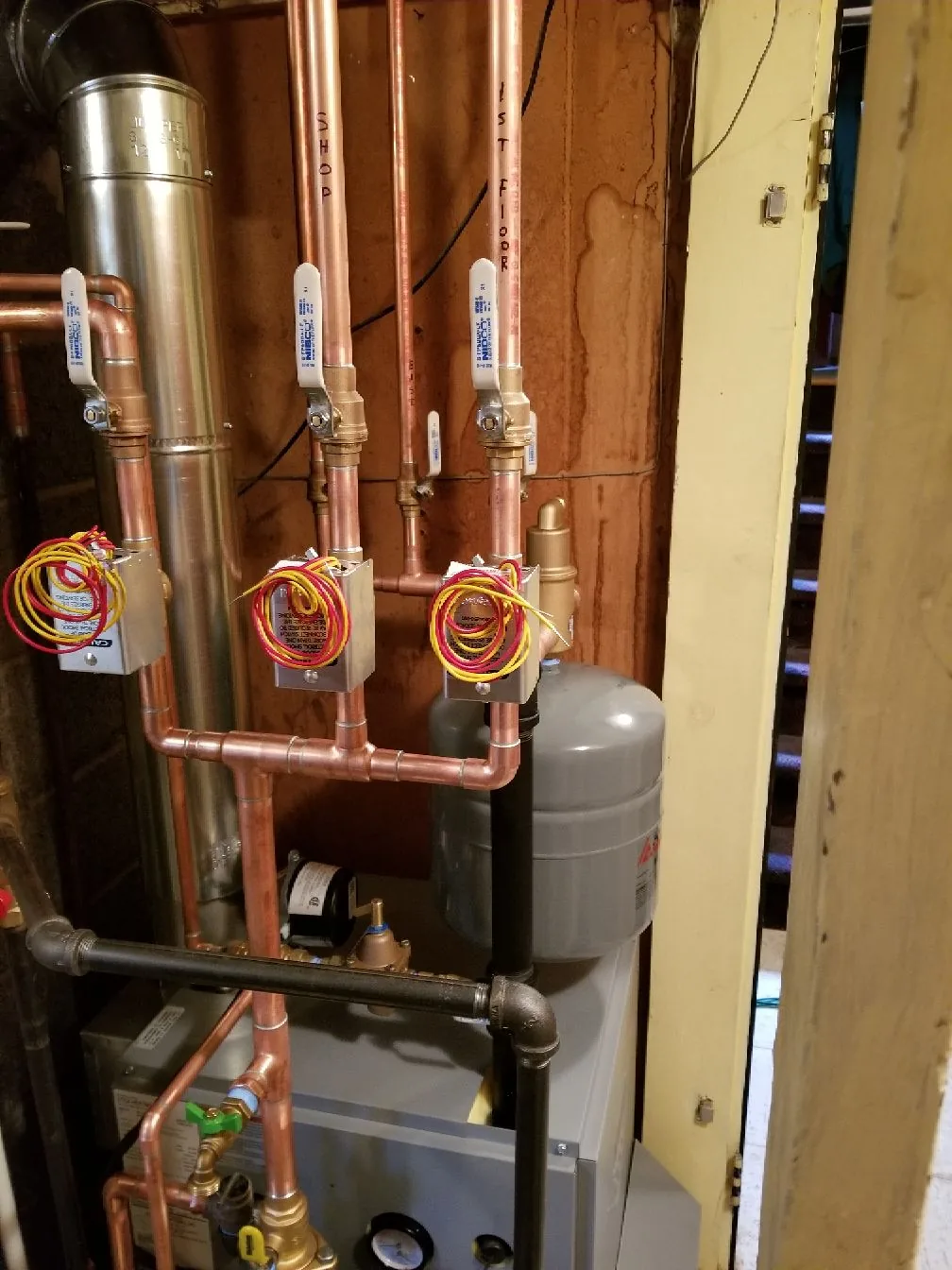
What causes low water pressure in an older home
The cause usually falls into one of three groups: narrowed pipes, a failing valve, or a problem outside the house. Checking pressure at more than one spot in the house usually tells you which one you’re dealing with.
Corroded or narrowed pipes are the usual suspect
Galvanized pipe rusts from the inside out. As a result, the pipe’s opening gets smaller every year, even though it looks normal from the outside. A home that had strong pressure 20 years ago can lose it gradually. There’s no single dramatic event that causes the drop.
This kind of narrowing tends to show up room by room instead of all at once. For example, an upstairs bathroom far from the main line often loses pressure first. A kitchen sink closer to the water main can keep running fine for a while longer.
A failing pressure regulator or shutoff valve
Many homes have a pressure-reducing valve where the main line enters the house. If that valve wears out or gets stuck, it can choke down flow to every fixture at once. An old or partly open main shutoff valve can create the exact same problem. The pipes themselves might be perfectly fine.
Because these valves are mechanical parts, they wear out gradually just like anything else that moves. That means a sudden, whole-house pressure drop points more toward a valve issue than toward corrosion. Corrosion, on the other hand, usually happens slowly over years.
It isn’t always your own plumbing
Sometimes the issue starts before water ever reaches your house. Municipal line work, a shared service line, or a problem out at the street can lower pressure for a while. However, if the drop is constant and only affects your home, the cause is almost always inside your own system.
When to call a plumber
If low water pressure in an older home keeps getting worse, it’s worth having a plumber check the supply lines. That beats waiting for a pipe to fail outright. A plumber can check pressure at several points in the house and inspect the regulator. From there, they can tell you whether the fix is a simple valve swap or a larger repiping job.
Whole-house repiping sounds like a big step. For a home with galvanized pipe throughout, though, it’s often the only fix that actually lasts. A simple valve swap just buys a little time by comparison.
Frequently Asked Questions
Related: Whole-house repiping · Residential plumbing · More from our blog