How to Use a Toilet Auger (Step-by-Step Guide)
 There’s a special kind of dread that comes with a toilet that won’t drain right. It always happens at the worst possible time, like twenty minutes before guests arrive. The good news: a stubborn clog laughing off your plunger doesn’t mean you need to call a plumber right away. In most cases, a toilet auger (sometimes called a closet auger) will clear it in a few minutes. Used correctly, it won’t scratch your porcelain or damage your pipes. Here’s how to use one.
What is a toilet auger?
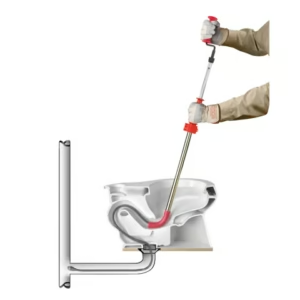
A toilet auger is a hand-held plumbing tool built to clear clogs inside a toilet’s trap. That’s the curved section of pipe built into the base of the bowl. It’s a long, flexible steel cable, usually 3 to 6 feet, housed inside a rigid tube. There’s a hand crank at one end and a curved tip at the other. Most toilet augers also have a rubber or plastic sleeve near the tip. It protects your porcelain finish from scratches as you feed the cable in. It’s not a glamorous tool, and it will never make it into a home renovation photoshoot, but it earns its keep.
That sleeve, along with a shorter, stiffer cable, is what separates a toilet auger from a standard drain snake. Both are built to navigate the tight bend of a toilet trap without marking up the bowl.
Most toilet augers sold for home use are manual, hand-crank models, like the RIDGID K-3 Toilet Auger. It’s a good reference if you want to picture the tool before buying or borrowing one. Drill-powered versions exist too. For a typical household clog, though, a manual auger works fine and actually gives you a better feel for how much resistance you’re pushing against.
When should you use a toilet auger instead of a plunger?
A plunger is always worth trying first. It’s faster and handles most everyday clogs. Reach for a toilet auger when:
- The clog doesn’t clear after several rounds of plunging
- Water drains very slowly rather than not at all
- You suspect something solid (a toy, a wipe, too much toilet paper) is lodged in the trap
- The toilet has clogged repeatedly in the same spot
Tools and supplies you’ll need
- A toilet auger (closet auger), $20 to $40 at any hardware store; worth owning outright if you deal with clogs more than once a year
- Rubber gloves (yes, even if you consider your hands to be professionally tough)
- Old towels or a rag, to lay around the base of the toilet
- A bucket, in case you need to remove excess water from the bowl first
- Disinfectant spray or wipes, for cleaning up afterward
How to use a toilet auger, step by step
Step 1: Prepare the area
Lay towels around the base of the toilet and put on your rubber gloves. If the bowl is unusually full, scoop out some water with a cup or small bucket first so it doesn’t splash over as you work. Move bath mats and anything else you don’t want to get wet out of the way. Future you will be grateful.
Step 2: Insert the auger
Feed the curved end of the auger, sleeve first, into the drain opening at the bottom of the bowl. Keep the protective sleeve pressed firmly against the opening as you go. This is what keeps the metal cable from ever touching, and scratching, the visible porcelain.
Step 3: Extend and rotate the cable
Slowly turn the hand crank clockwise. This feeds the cable further into the trap while the rotation helps the tip work its way around the bend and into the clog. Go slowly and steadily; cranking too fast can cause the cable to kink or coil back on itself instead of moving forward.
Step 4: Break up and retrieve the clog
When you feel resistance, you’ve reached the clog. Keep cranking gently. You’re either breaking the obstruction apart or hooking onto it so you can pull it back out. A change in resistance, or water suddenly draining, usually means the clog has cleared.
Step 5: Retract, test, and clean up
Reverse the crank to slowly pull the cable back out, keeping the sleeve against the bowl the whole way to protect the porcelain. Flush to confirm water drains normally. Disinfect both the toilet and the auger afterward too. It’s a step people skip, but it matters for hygiene.
Common mistakes to avoid when using an auger on a toilet
Even with the right tool, a few habits cause most of the frustration, and the occasional cracked bowl. Forcing the cable is the big one: if you meet heavy resistance, ease off and try a gentler angle rather than cranking harder. The clog is not going to be intimidated by your strength, and force is what cracks porcelain or kinks the cable. Skipping the sleeve is the single most common cause of scratches. Cranking too fast can make the cable coil on itself inside the trap, where it gets stuck. And if the clog doesn’t clear on the first pass, that’s normal. It’s not a sign the tool isn’t working; it sometimes takes two or three tries.
Toilet auger vs. toilet snake: which should you use?
“Toilet auger” and “toilet snake” get used interchangeably by most homeowners, kind of like “soda” and “pop.” For basic toilet clogs, either term usually refers to the same type of tool. But there are real differences worth knowing if you’re buying one or deciding how to use a snake for the toilet versus a dedicated auger:
| Feature | Toilet Auger (Closet Auger) | Standard Drain Snake |
|---|---|---|
| Best for | Clogs inside the toilet trap | Clogs in sinks, tubs, and longer drain lines |
| Porcelain-safe sleeve | Yes, built in | Usually no |
| Cable stiffness | Stiffer, built for a toilet’s tight bend | Thinner and more flexible |
| Typical cable length | 3 to 6 feet | Can extend much further (25 ft.+) |
| Risk to toilet bowl | Low, when the sleeve is used correctly | Higher, can scratch or damage porcelain |
If the clog is inside the toilet itself, use a toilet auger. Save the snake for sinks, tubs, and floor drains.
When to call a professional plumber
A toilet auger solves the vast majority of clogs, but it’s time to call a plumber if:
- The clog returns repeatedly despite clearing it yourself
- Multiple fixtures in the house are draining slowly at the same time (a sign of a sewer line issue, not a simple toilet clog)
- You can’t locate or reach the blockage with the auger’s full cable length
- Water backs up into the tub or shower when you flush
Those signs usually point to a problem further down the line than an auger can reach. It could be a partial blockage in the main sewer line, a venting issue, or in older homes, a pipe that’s simply too narrow or corroded to clear with hand tools. Trying to force a fix at that point tends to make the repair more expensive, not less, and there’s no prize for stubbornness here.
Frequently asked questions
Is a toilet auger the same as a toilet snake?
They’re closely related and often used as interchangeable terms. Technically, a “toilet auger” (or closet auger) refers specifically to a short, stiff cable tool with a protective sleeve built for toilets. “Snake” is a broader term that also covers longer, thinner cables meant for sinks and drain lines.
Will a toilet auger scratch my toilet bowl?
Not if you use it correctly. Keep the rubber or plastic sleeve pressed against the drain opening at all times. That’s what keeps the bare metal cable from making direct contact with the porcelain.
How far into the toilet should I feed the auger cable?
Feed it in slowly until you feel resistance; that’s the clog. Most toilet clogs sit within the first few feet of the trap. That’s well within a standard auger’s cable length, so you generally won’t need to extend it all the way.
What should I do if the auger doesn’t clear the clog?
Try two or three passes at slightly different angles before giving up; clogs often need a few attempts. If it still won’t clear, or you suspect an object is stuck rather than an organic clog, call a licensed plumber. It’s not worth risking damage to the toilet or the pipes.
Dealing with a clog that won’t budge, or a toilet that’s clearly decided today is the day it fights back? Contact Absolute Precision Plumbing & Heating for fast, professional help, or learn more about our residential plumbing services.