
If you own a tankless water heater, you’ve probably heard that it needs flushing from time to time. So how often should you flush a tankless water heater? For most households, once a year gets the job done. Homes with harder water may need it more often, and homes that use less hot water can sometimes stretch that interval a little.
Skipping the flush doesn’t make the unit stop working right away. Instead, it slowly loses efficiency, runs hotter internally than it should, and can eventually trip an error code or shorten its lifespan. Because the fix is so simple, a yearly flush is a small job that heads off a much bigger one down the road.
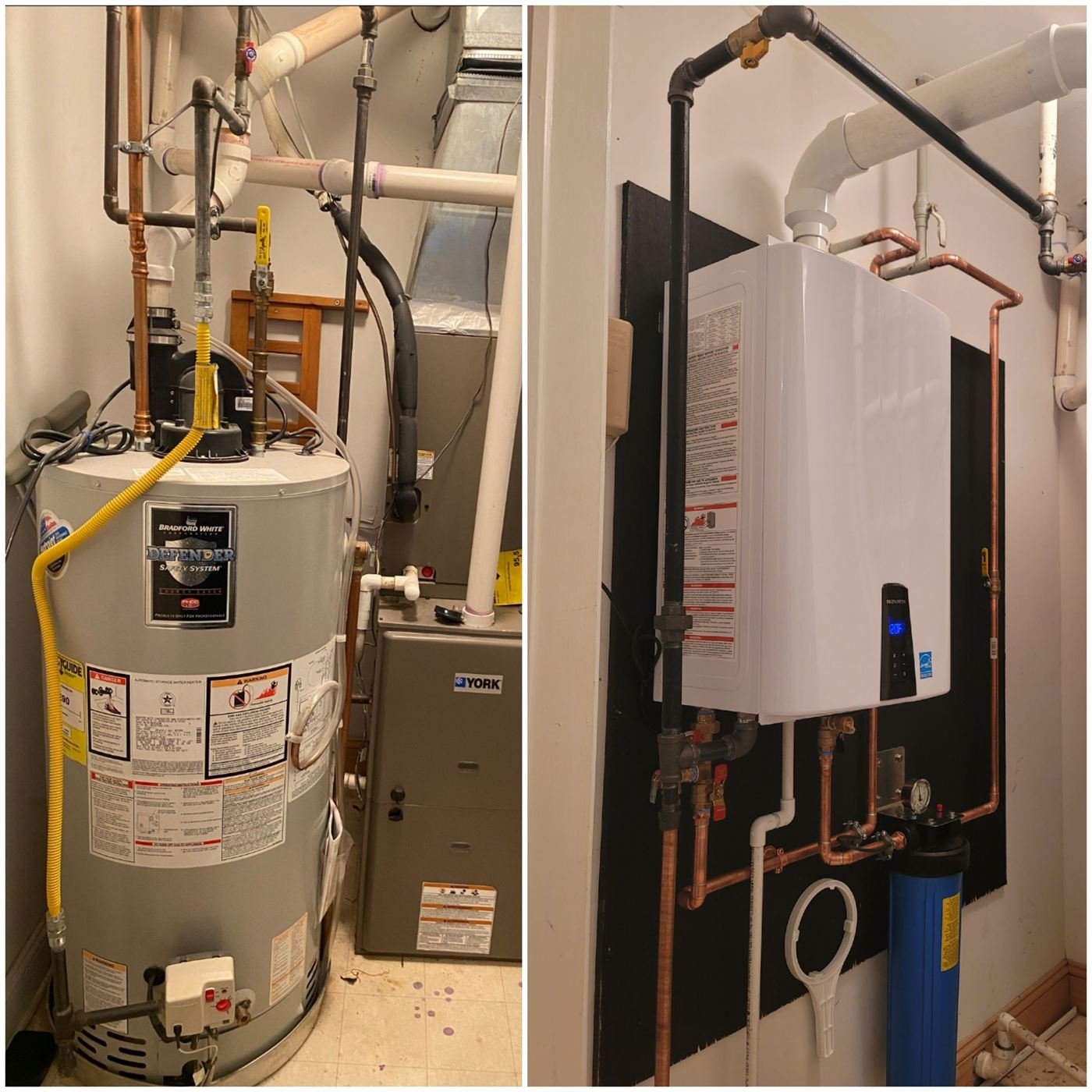
Why you need to flush a tankless water heater at all
A tankless unit heats water as it passes through a compact heat exchanger instead of storing it in a tank. Because that exchanger is small, any mineral content in your water has less room to collect before it starts affecting performance. Over time, that buildup coats the inside of the exchanger like a layer of insulation, so the unit has to work harder to heat the same amount of water.
Flushing clears that scale out before it turns into a real problem. For example, we run a camera on every drain cleaning job we do, for the same reason: it’s easier to catch buildup early than to deal with a failure later.
Signs your tankless water heater is overdue for a flush
A few signs tend to show up before a full breakdown happens. Water temperature may start to fluctuate instead of staying steady. The unit might take longer to deliver hot water than it used to. You may also notice higher gas or electric use for the same amount of hot water, or an error code tied to flow or temperature sensing.
None of these mean the unit is failing for good. In most cases, they just mean it’s overdue for maintenance.
How often should you flush a tankless water heater
As a general rule, once a year covers most homes. That said, water hardness varies from house to house, so a home on harder water may do better flushing twice a year instead. If you’re not sure where your water falls, a plumber can check it during a routine visit and set a schedule around your actual water, not just a date on the calendar.
We install and service Navien tankless units regularly, including the NHB-H, NCB-H, NFC-H, NFB-H, NFB-C, and NFB700-C models, and we recommend a consistent annual flush no matter which brand you own.
What a professional flush actually involves
A flush uses the isolation valves installed alongside the unit to circulate a descaling solution through the heat exchanger in a closed loop. That solution breaks down mineral scale without opening up the unit or disturbing the gas or water connections. After that, the system gets flushed clean with fresh water before it goes back into normal use.
If your unit doesn’t have isolation valves yet, that’s worth addressing first, because without them a flush becomes a much more involved job.
When to call a plumber instead of waiting
Call sooner rather than later if you notice an error code, inconsistent temperatures, or a drop in hot water performance. Waiting usually just means more scale to clear out once someone finally looks at it. We offer 24/7 emergency service, including holidays, so a sudden issue doesn’t have to wait for a weekday appointment.
Frequently Asked Questions
Related: Tankless water heater installation and repair · High efficiency heating units · More from our blog