
A burst pipe can dump gallons of water into your home in minutes, so your burst pipe first steps matter more than almost any other plumbing skill you’ll ever need. What you do in that first stretch decides how much damage you’re cleaning up afterward, because water soaks into drywall, flooring, and insulation fast once it starts moving.
Most homeowners freeze for a few seconds when they see water spreading across a floor. That’s normal, but every minute that passes adds to the cleanup. Here’s what your burst pipe first steps should actually look like, in order.
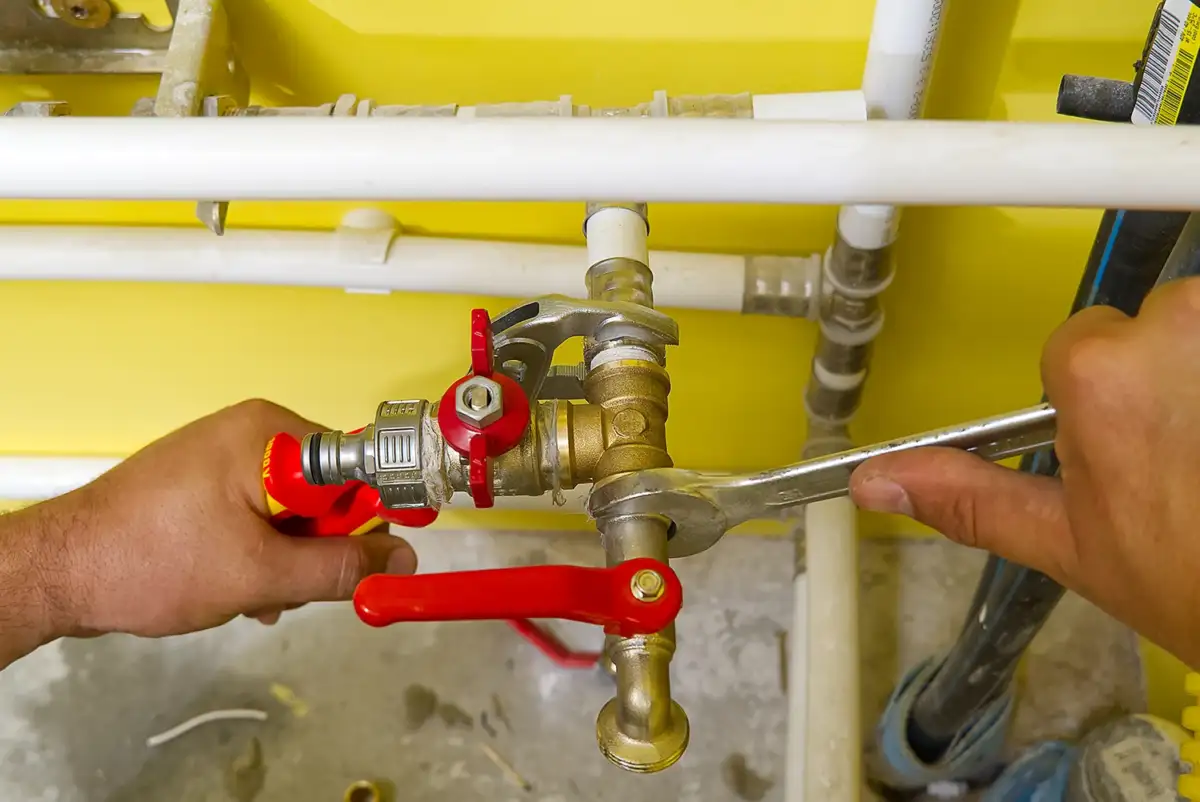
Shut off the water right away
Find the main shutoff valve for your house and turn it all the way off before you do anything else. It’s usually near the water meter, in the basement, a crawl space, or wherever the main line enters the home. If you don’t already know where yours is, that’s a good reason to go find it today, before an emergency forces you to search for it under pressure.
If the burst is at a single fixture, like under a sink or behind a toilet, you may be able to close a smaller shutoff valve right at that fixture instead. That stops the leak without killing water to the rest of the house, so try that first if it’s within easy reach.
Cut the power if water is anywhere near it
Standing water near outlets, light fixtures, or a water heater is a shock hazard. If the flooding is near an electrical panel or any plugged-in appliance, shut off power to that area at the breaker box, but only if you can reach the panel without stepping through water. If you can’t get there safely, leave it alone and call for help instead.
What to do once the water is off
After the water’s off, move fast to limit the damage. Mop up or shop-vac as much standing water as you can, move furniture and rugs off wet flooring, and open windows if the weather allows it to help the area dry out. Also, photograph the damage before you clean too much, since those photos can help later if you file an insurance claim.
Towels, buckets, and a wet/dry vacuum handle most of this. For a slow drip, a bucket under the pipe can buy you some time. For a true burst, though, don’t expect towels to keep up with it. Get the water stopped first, then worry about drying everything out.
What usually causes a pipe to burst
In this part of New Jersey, freezing is the most common cause during cold spells, especially in unheated basements, crawl spaces, and exterior walls. Older galvanized or copper pipe can also corrode from the inside over the years until it finally gives way, often with no warning at all. High water pressure adds constant stress to pipes and fittings too, and that stress builds up over time even in newer plumbing.
When to call an emergency plumber
Call right away if you can’t find or reach the main shutoff, if water keeps coming after the shutoff is closed, or if the break is inside a wall or ceiling where you can’t see how bad it is. A licensed plumber can also check for damage you might miss, like a cracked fitting further down the line. Absolute Precision Plumbing & Heating offers 24/7 emergency service, including holidays, at (551) 257-6200.
Frequently Asked Questions
Related: Water leak repair · More from our blog